Market Town or Village: Pick the Pace That Fits
Market town or village? Compare transport, facilities and walking conditions to choose a southern England outing that suits your morning and interests.
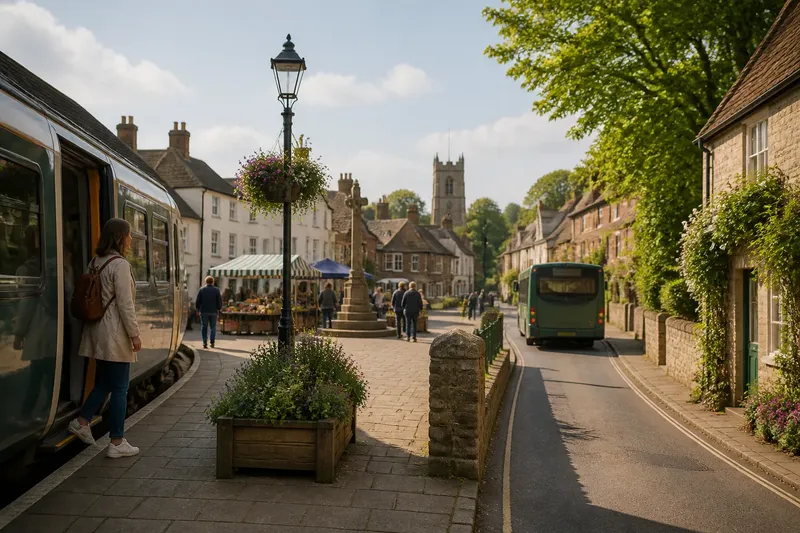
A train doors open beside a market square, while a village bus continues down a narrow lane. If you are deciding between a market town or village in southern England, start with what you want to spend your attention on: nearby places to visit, or the paths and buildings encountered along the way.
The difference is not simply a matter of scale. A town often brings cafés, shops and indoor attractions together; a village may offer a green, a church, a pub or a footpath, with more of the visit unfolding outdoors. Each can make a satisfying outing, but they suit different expectations.
What will you find in a market town?
A market square or high street can be a useful place to orient yourself. From there, you might explore independent shops, a local museum, a church or a public garden without needing to travel between distant destinations. The town’s centre also tends to make it easier to find somewhere for a drink or lunch.
That combination suits visitors who want indoor and outdoor options close together. Before travelling, check opening days for any museum or market you particularly want to see. A town can still be pleasant when one venue is closed, but it helps to know what else is available rather than building expectations around a single stop.
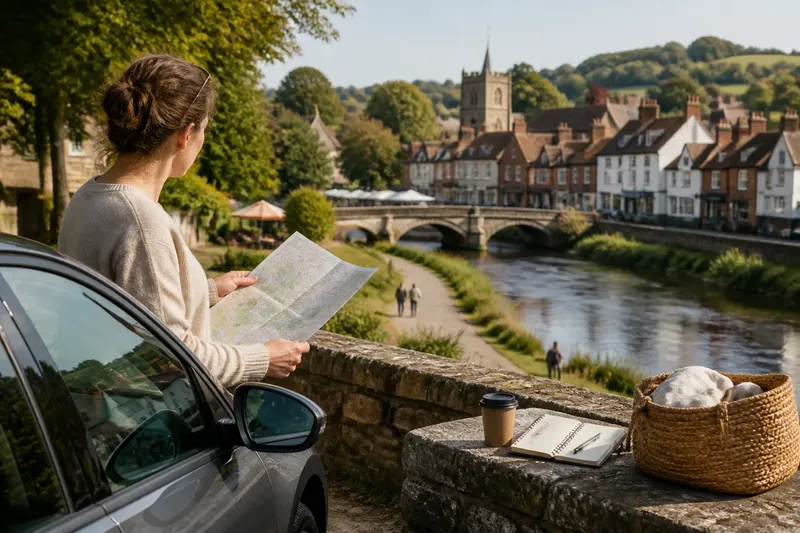
Traffic and the layout of the centre affect the feel of a walk. A busy road may make the high street lively, while a riverside path or churchyard can offer a quieter change of scene. Look at a map before setting out if you want to connect the centre with a particular green space.
What makes a village visit different?
In a village, the route between places may be as interesting as the destinations. A public footpath might lead from the green towards fields; a church or pub may sit some distance from the bus stop. The settlement’s edges, where houses meet lanes and countryside, often provide the most satisfying walk.
Facilities can be limited or have restricted opening days. If you want lunch or shelter, check what is open and consider carrying water and a suitable layer. On narrow roads, use care around traffic; on public paths, follow signs and local access guidance, and avoid blocking gates or driveways.
A village is a good fit when walking and looking closely at the surroundings are central to the outing. If you expect a succession of shops or indoor attractions, a market town is more likely to suit you.
Which practical details should decide between them?
- Transport: Check the outward and return train or bus times. If services leave a long gap, choose a town with more connections or plan a shorter village visit around the timetable.
- Opening hours: Check whether the museum, market or café you hope to visit is open. If it is closed, choose another confirmed attraction or pick a different destination.
- Walking route: Look for a signed route and note whether it uses pavements, lanes or public footpaths. If the route is unsuitable for your group, choose a shorter town walk or another village path.
- Weather: Check the forecast and consider how much of the outing depends on being outdoors. If rain would make the main village walk unappealing, favour a town with indoor options.
- Refreshments: Confirm whether a café, pub or shop is open near your route. If not, bring what you need or choose a place with reliable alternatives.
- Access needs: Check route surfaces, gradients and available facilities. If these do not suit your requirements, contact the relevant venue or choose a more accessible route.
How do you choose for the morning you have?
Start with the time available, then decide what you most want to do. A shorter visit may work better in a town where a café, shops and a cultural stop are close together. With a longer window, you may enjoy a village walk that takes in a lane, a green and open countryside. These are useful tendencies, not rules: transport and opening hours can change the answer.
Say you have a free morning, a train to a market town, and an interest in local history. You check the museum’s opening day, confirm the return train, and see that a riverside path begins near the centre. You visit the museum, walk the path and stop for lunch nearby. The result is a town outing with a clear historical focus and a route back to the station; if the museum is closed, you can instead explore the historic streets and take the same walk.
It is not worth the effort to identify every minor landmark before you go. A short list of confirmed options is more useful than planning around places that may be shut or difficult to reach.
What do people ask when choosing a market town or village?
Is a market town easier for a first visit?
Often, its centre makes it simpler to find shops, refreshments and points of interest in one area. Check which places are open, then choose a main stop that matches your interests.
Can a village fill a morning?
Yes, if you enjoy walking and observing buildings and landscape rather than moving between indoor attractions. Check the route, transport and refreshment options so the available facilities match your plans.
Which is easier to visit without a car?
A town with a railway station or suitable bus service may offer more flexibility, but some villages are accessible by public transport too. Check service days and return times before choosing, as they determine how long you can stay.
Can I visit both in one outing?
Yes, if the connection between them is straightforward and the transport times leave enough time in each place. If the journey would take up much of your available morning, choose one destination and make the most of what it offers.
How can you tell when the outing has had enough?
Choose a simple purpose before leaving home: perhaps a museum visit, a walk along a public path or lunch in a new place. When that aim is met and the return journey is convenient, you have a natural point to head back. A market town or village can each provide a worthwhile change of scene; the better choice is the one whose transport, facilities and surroundings fit the day you actually have.
For a future market town or village outing, remember which detail shaped your experience most: the return timetable, the path surface, the venue’s opening day or the availability of somewhere to sit. That small note can make the next choice easier without turning a day out into a research project.