A Rainy Afternoon at Home, Built Around One Table
Plan a rainy afternoon at home around one shared table activity, with a welcoming layout, easy refreshments and a gentle rhythm that lets guests settle in.
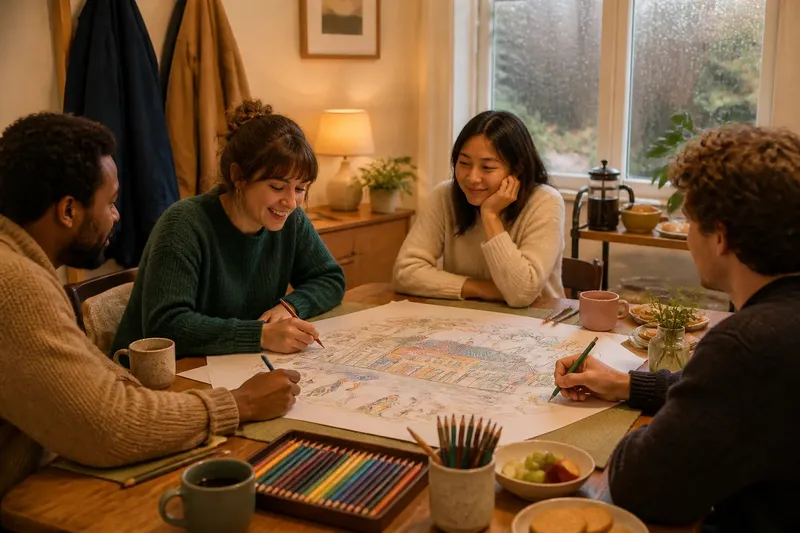
Rain taps at the window as damp coats gather in the hall and guests begin to arrive. A rainy afternoon at home can feel welcoming rather than makeshift when one shared table activity gives everyone a reason to gather, without turning the room into an event venue.
The table offers something to do and a place to pause between conversations. Choose an activity with an easy first move, then arrange the room so people can join at their own pace.
What makes a good rainy afternoon at home activity?
Choose something that is simple to start and easy to leave for a moment. A jigsaw suits guests who enjoy a quiet shared task; a card game gives the afternoon a turn-taking rhythm; collaborative drawing offers a gentle option for people who prefer making something to keeping score. The right choice depends on who is coming, how much space you have and whether anyone would rather watch before joining.
For a group with mixed interests, avoid activities that need a long explanation, specialist knowledge or several separate sets of equipment. The aim is not to occupy every minute, but to make taking part feel natural.
Say you are hosting friends with different appetites for games. You have blank cards and coloured pencils, so you set out a shared drawing prompt: add a small detail to a picture of an imaginary village. One guest draws a window, another chooses a colour, and a third watches at first; the growing scene gives a late arrival an easy way to understand the activity and join if they wish.
How should you set up the table?
Clear everyday clutter and leave room for hands, elbows and drinks. A wipe-clean tablecloth or a few placemats can mark the working area, while a small tray keeps spare pencils, cards or game pieces together. Put out only what guests need to begin; keep additional materials in a box or basket nearby.
If the activity uses paper, place spare sheets beneath the working area to protect the table from pencil marks. Keep drinks on a sideboard, kitchen counter or trolley when possible, especially if the table is full of paper or game pieces. Choose washable materials if spills are likely.
Leave chairs easy to reach and keep an open place if someone may arrive later. A lamp near the table can help on a grey afternoon, provided its light does not shine into anyone’s eyes. The room should feel ready, not staged.
What helps different guests feel comfortable?
Make participation optional and easy to understand. Leave a short set of game rules or a sample prompt where people can see it, then explain the first move in a few sentences. For a creative activity, offer a couple of starting ideas without prescribing what the finished work should look like.
Place shared materials within comfortable reach and leave a side surface free for bags or extra cups. Children may find a separate tray of larger, easier-to-handle materials useful, while adults can take part in the same central activity. If a guest mentions a particular access need, ask privately what arrangement would help and make reasonable adjustments. For advice about a medical or mobility condition, the guest can consult their GP, occupational therapist or another clinician familiar with their needs.
Serve refreshments that are easy to handle without interrupting the activity: tea, coffee or squash with biscuits, sliced fruit or another simple snack. Keep hot drinks away from the working area and make a clear place for used cups.
How can you give the afternoon an easy rhythm?
Let the first few minutes be about arriving rather than starting immediately. Offer a drink, show guests where to leave coats, then point out the activity and its opening move. Some people will settle in quickly; others may prefer a conversation first.
Once the activity is under way, let the group decide how much structure it needs. A game may benefit from someone keeping turns moving; a jigsaw or drawing session can sit quietly alongside conversation. If energy dips, offer a pause for refreshments instead of switching activities merely to fill the silence.
It is not worth creating a themed room, preparing several backup activities or making every snack from scratch. A clear surface and a few useful materials usually do more for comfort than an elaborate display. Keep one small alternative nearby only if it suits the same group, such as a deck of cards beside a jigsaw.
What can you adjust if the activity loses momentum?
Offer the group a choice before changing course. Suggest a short break, ask whether people want to continue or propose a small variation using the same materials. A new drawing prompt can refresh a creative activity; a brief recap of the rules can help someone rejoin a game.
If conversation starts to take over, let the activity become a background option. There is no need to insist that everyone finishes a puzzle or completes a round. Move spare materials aside, refill drinks and leave the central table open for conversation.
Which planning questions help with a rainy afternoon at home?
How many people can share one table activity?
Choose an activity that fits the available seating and surface without crowding anyone. If the group is larger than the comfortable places at the table, leave space around the edge for guests to watch, talk or join when a place opens.
What is a good activity for guests who do not know one another?
Choose something with a visible, low-pressure first move, such as a shared jigsaw or drawing prompt. It gives people something to notice and comment on without asking anyone to perform or know the rules already.
How do you keep refreshments away from the activity?
Use a sideboard, kitchen counter or small trolley for drinks and snacks, with cups easy to collect. Guests can help themselves without bringing spills close to paper, pencils or game pieces.
Should you plan a set finishing time?
Tell guests roughly when you expect the gathering to wind down, particularly if they are travelling home in poor weather. A flexible finish feels less abrupt: collect empty cups or return unused materials to their tray as a gentle cue.
How can you close without making the gathering feel abrupt?
As the afternoon draws on, let tidying become part of a natural pause. Collect cups, return loose pieces to their box and leave any shared work visible until guests are ready to go. If the activity can be resumed later, keep its materials together in a tray or box so the table can be cleared without dismantling the work.
One suitable activity, a comfortable table and a clear place for refreshments give a rainy afternoon at home enough structure to feel considered. Before guests arrive, check that everyone has somewhere to sit, something easy to begin and room to talk. If all three are in place, the gathering can unfold without a packed programme.